The Deck
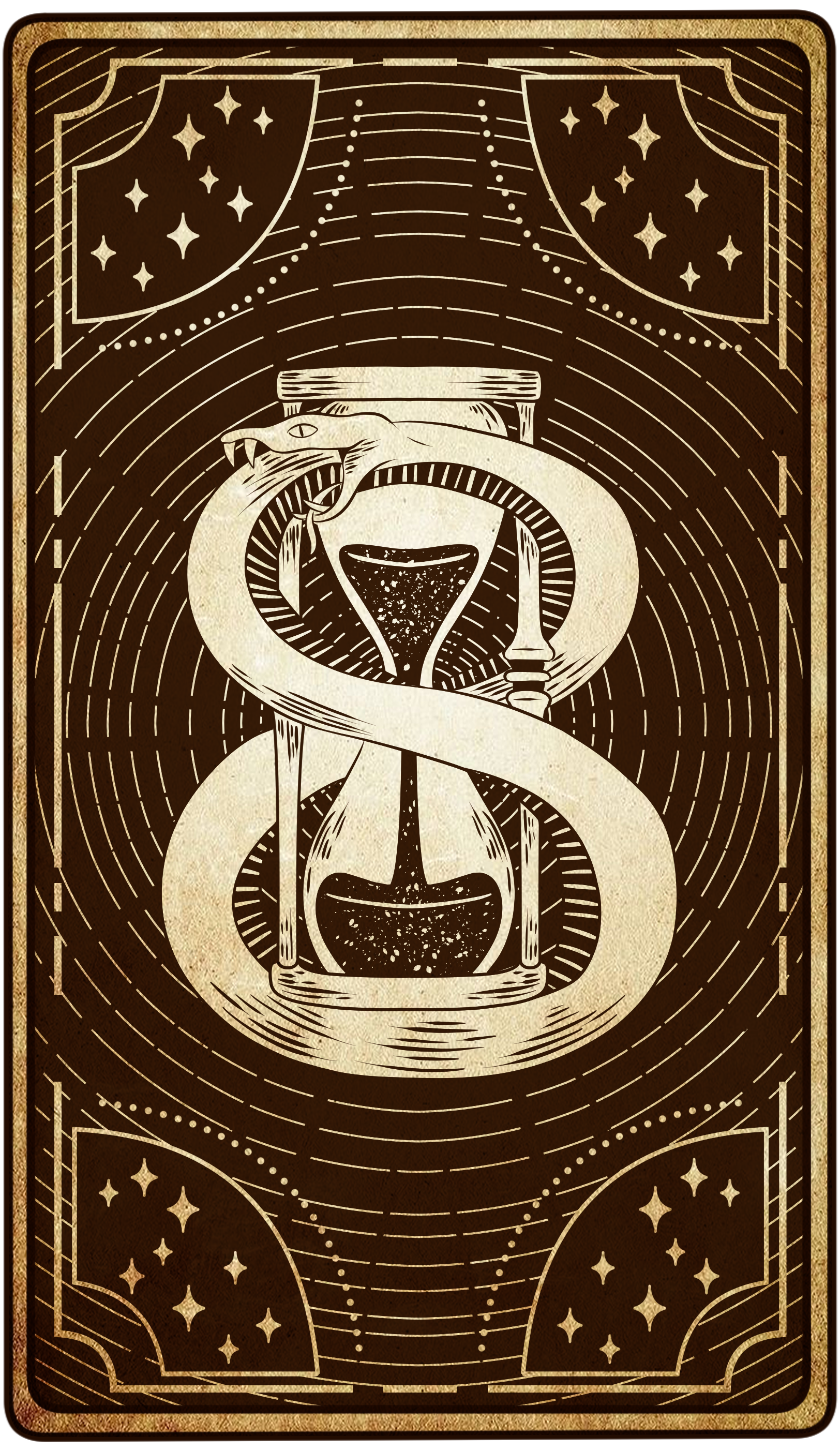
23 cards
Your Reading
Draw from the deck to begin.
The Deck of Elysian — Alloweth the cards bewray what fate hath writ.
Abraham Zachariah, Primus and God of Knowledge, cut the first deck as something mortals could hold: fate made small enough to fit in two hands. Twenty-two cards in the common printing. Twenty-three in the honest ones.
It spread the way useful things spread. You will find it in the parlours of Tolria and under the awnings of Osiran market stalls, in the packs of hedge-mystics and in the vaults of temple libraries that officially do not own one. The card-stock changes between makers. The order never does.
Scholars still argue over whether the deck predicts or merely describes. The clergy of Zachariah consider the question badly put. What is not in dispute: a reader who has never held a deck draws well on the first attempt, and a reader who has held one for forty years draws no better.
More of the world at legendsoftolria.com.
Three cards, drawn in succession from a freshly shuffled deck and laid face-down before the querent. They are turned one at a time and read together, never separately: what stood behind, what stands now, what is coming. A reader who interprets the third card on its own has not finished the reading.
The cards do not instruct. They describe. That distinction is the one querents most often fail to hear, and it is the one that matters, because those who learn their fate and set out to avoid it have a poor record. The road taken to escape the prophecy tends to be the road that arrives at it. Those who fight the weave harder than that tend to fetch up somewhere worse than what was written. The fates are not cruel. They are patient.
Common decks run 0 through XXII with XIII left out. Thirteen is ill-omened in Tolria and Osira both, and no card-maker with a reputation prints it unasked.
XIII is Apathy, The Void. It is not bad luck. It is a herald — of cataclysm in the querent’s life, in the lives around them, or in the world. The card carries Azhorra’tha, named in the oldest texts as Eyes of Stars: the void everything was spawned out of, and which is in no hurry. Full decks of twenty-three exist. They belong to readers who decided that knowing the whole shape of a fate is worth what it costs to look at it.